
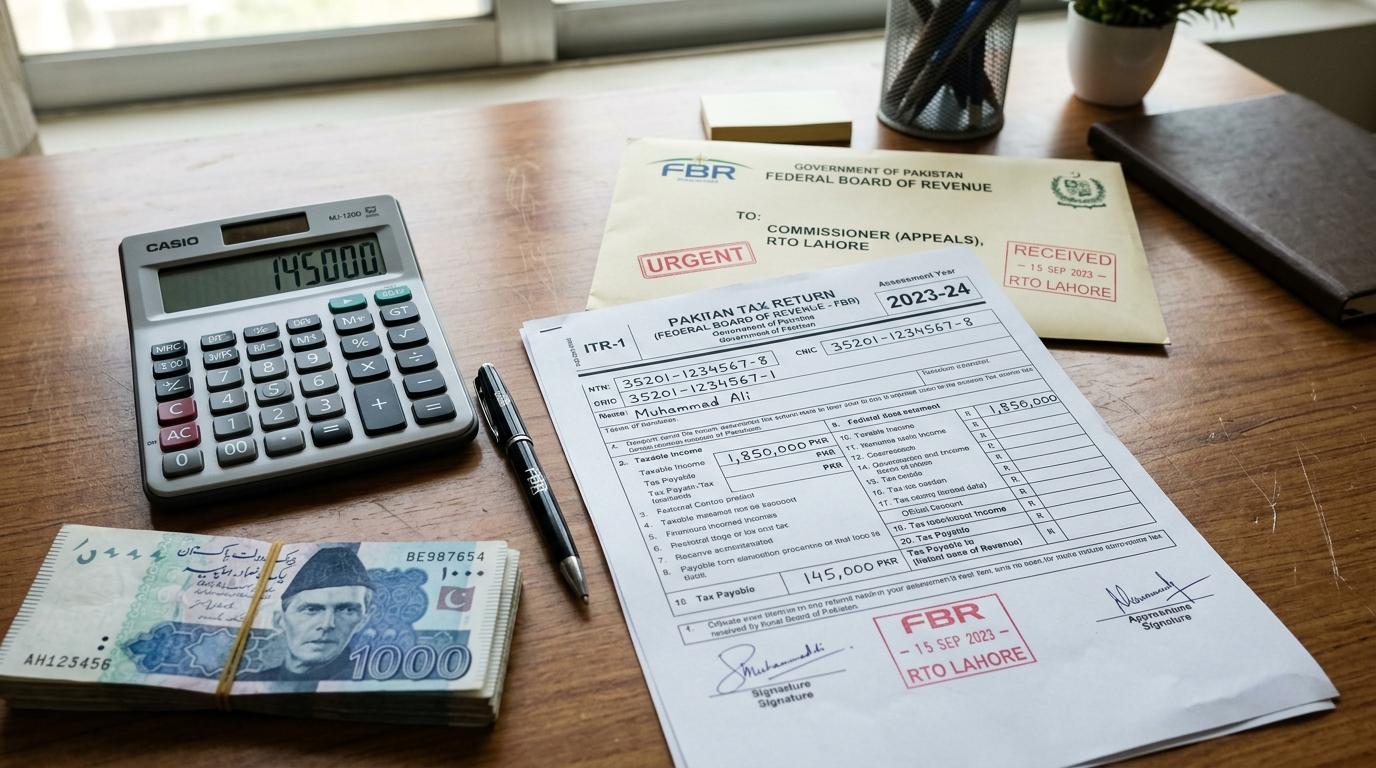
The FBR filer property tax difference in Pakistan has widened to the point where non-filer status is now a serious tax penalty on every property transaction. As of the 2025 Finance Act and reinforced through 2026, non-filers pay 3× the filer rate on advance tax at purchase, 2× the filer rate on capital gains tax at sale, and face restrictions on the size of property they can purchase outright.
This guide breaks down the exact tax-rate gaps in 2026, what becoming a filer costs and saves, and the three transactions where filer status matters most.
What "filer" means in 2026
A filer is a person whose name appears on the FBR's Active Taxpayer List (ATL) — meaning they have filed a tax return for the most recent tax year AND filed it before the deadline. ATL status is published weekly and you can check yours by sending your CNIC to 9966 via SMS or via FBR's IRIS portal.
A non-filer is anyone NOT on the ATL — whether you have never filed, you filed late, or you filed but the return is under processing.
ATL status matters on a per-transaction basis. If you become a filer in April 2026 and complete a property transaction in May 2026, you transact at filer rates.
The 2026 property tax rate gap
Advance tax at purchase (Section 236K)
Payable by the buyer at the time of property registration. Calculated on the FBR-notified property value (typically below market value).
| Property value | Filer rate | Non-filer rate | Gap |
|---|---|---|---|
| Up to PKR 50 lac | 1% | 3% | 3x |
| PKR 50 lac — 2 crore | 2% | 5% | 2.5x |
| PKR 2 — 5 crore | 3% | 7% | 2.3x |
| Above PKR 5 crore | 4% | 10% | 2.5x |
For a PKR 5 crore property purchase, a non-filer pays PKR 35 lac in advance tax. A filer pays PKR 15 lac. The PKR 20 lac gap is meaningful.
Capital Gains Tax (Section 37) at sale
Payable by the seller on the profit from sale (sale price − purchase price − adjusted holding cost).
| Holding period | Filer rate | Non-filer rate |
|---|---|---|
| Up to 1 year | 15% | 30% |
| 1 — 2 years | 12.5% | 25% |
| 2 — 3 years | 10% | 20% |
| 3 — 4 years | 7.5% | 15% |
| 4 — 5 years | 5% | 10% |
| 5+ years | 0% | 5% |
For a property held 3 years with a PKR 1 crore capital gain, a filer pays PKR 7.5 lac in CGT. A non-filer pays PKR 15 lac.
Annual property tax
Provincial, not federal. Punjab charges roughly 5-8% of annual rental value (which itself is calculated at roughly 6-8% of property value). For most DHA properties, annual tax ranges PKR 50,000 — 300,000 depending on size. Non-filer surcharge of 100% applies in many provincial rates, doubling this number.
What becoming a filer costs
If you have any documentable income (salary, business, rental, freelance), filing a return costs:
- DIY via IRIS portal: free (your time)
- Accountant assisted: PKR 5,000 — 25,000 depending on complexity
- Tax consultant assisted (multi-source income): PKR 25,000 — 75,000
For nearly every Pakistani with verifiable income, the math works out hugely in favor of filing — even a PKR 30,000 accountant fee pays for itself many times over on a single property transaction.
The three transactions where filer status matters most
1. Buying any property above PKR 50 lac
The advance tax saving alone on a PKR 1 crore purchase is PKR 3 lac (filer 2% vs non-filer 5%). At PKR 5 crore, the saving is PKR 20 lac.
2. Selling within the first 5 years of holding
The CGT rate gap (filer vs non-filer) is roughly 2x across all holding periods inside 5 years. On a PKR 2 crore capital gain, this is PKR 10-30 lac difference.
3. Acquiring agricultural land or rural plots
Non-filer restrictions on agricultural land acquisition above certain size thresholds (varies by province) effectively block non-filers from larger land purchases. Filer status removes the cap.
How to actually become a filer
The cleanest path:
- Open a tax profile on FBR IRIS (iris.fbr.gov.pk) — needs CNIC, mobile number, email
- Generate NTN (National Tax Number) — instant for individuals
- File a tax return for the most recent year — even a return showing nil tax payable counts
- Wait for ATL publication — usually the next Monday after filing
Typical total time: 7-14 days for someone with simple finances. 30-60 days for complex multi-source income or backlogged previous years.
What to verify before any property transaction
Three checks before signing biyana:
- Your own ATL status — confirm you are listed
- Counter-party ATL status — important for joint transactions (e.g. spouse co-signer)
- Latest FBR notification on property tax rates — rates change yearly with Finance Act
For the broader property transaction context, see How to Buy a House in DHA Lahore and our DHA property transfer process guide.